
Inventonomics: The Axiomatic Discipline of Systematic Invention
Transforming sporadic human creativity into an algorithmic science for the AI era.
TABLE OF CONTENTS
1. The Essence of Invention: Needs, Wants, and Problem Pairing
2. The Tri-Category Problem Taxonomy (P-S Framework)
3. Object-Oriented Problem-Solution Modeling (OO-PSM)
4. The Axioms of Inventing Space (Systemic Constraints)
5. Graph Connectivity & Chain Mapping (“Is Light Edible?”)
6. Validation, Historical Mapping, and Academic Roadmap
1. The Essence of Invention
Invention is fundamentally the systematic discovery of solutions ($S$) for defined or latent problems ($P$).
Problems originate from two distinct human states:
- Needs: Finite, biological, physical, and environmental constraints that must be resolved for survival and stability.
- Wants: Human-constructed desires, socio-technical evolutions, and aspirational goals that drive progress.
An inventor is a systematic hunter of both. While problems exist in abundance, synthesizing optimal solutions requires a structured methodology.
| Category | Problem-Solution State | Inventor Mandate | System Action |
| Type 1 | Problem (P) exists with known Solution (S) | How can S be improved? | Optimization & Refactoring |
| Type 2 | Problem (P) exists with NO Solution (S) | How can S be created? | Synthesis & Invention |
| Type 3 | Problem (P) does NOT exist; NO Solution (S) | How can P be framed, then S created? | Latent Discovery & Paradigm Shift |
3. Object-Oriented Problem-Solution Modeling (OO-PSM)
To systematize inventing, we apply Object-Oriented Paradigm Logic to problem spaces:
Problem Object P = { A1, A2, … An}, where Ai = System Attribute
- Decomposition: Identify and list all physical, environmental, and operational attributes (Ai) of P or an existing S.
- Prioritization Set (PP): Order attributes based on contextual, economic, or social constraints, or goals.
- Method Resolution: Develop targeted algorithmic functions (“methods”) to alter, optimize, or replace priority attributes until an acceptable solution state is achieved.
Mathematical Foundation: Vector Space Problem Modeling
Every real-world product, service, or process object ($O$) is defined as a vector $v$ within an $n$-dimensional attribute space:
v = (A_1, A_2, A_3, … , A_n)
Where A_i represents key operational constraints (e.g., cost, mass, energy expenditure, manufacturing complexity).
4. Core Axioms of Inventing Space
Learners of Inventonomics master a finite basis set of universal principles:
- 4.1 Axiom of Non-Perfection: No solution is final; every system S contains latent inefficiencies subject to continuous iteration.
- Informally, Perfection doesn’t thus everything is improvable.
- 4.2 Axiom of Human Capability: If a mechanism is bounded by physics, human cognition—amplified by AI—can construct it.
- Informally, every problem can be mapped to 1 or more solutions, every solution is improvable (Axiom 4.1)
- 4.3 Axiom of Systemic Connectivity: Every functional object requires Input and Output (I/O); isolated systems are unusable.
- The Cosmos is Continuous: Everything is connected to everything the key is to identify the connections.
- 4.4 Axiom of Conservation: Every physical and cognitive transformation carries costs that can be categorized. Energy is the ultimate cost to everything.
- Informally, this is known as “No free lunch” popular metaphor.
- We are working on finding more universalities.
5. Interconnectedness & Chain Mapping (e.g., “Is Light Edible?”)
Case Study: Graph Traversal in Invention
Consider the question: Is light edible?
Direct evaluation suggests no. However, system chain mapping reveals:
Solar Photons (hn) –>Photosynthesis } (Plants) –>Caloric Intake (Human)
Light is the primary energy input of human biological sustenance. By teaching learners to trace systemic connections across domains, Inventonomics unlocks non-obvious solution paths and multi-hop innovations.
Examples of Inventonomics approach.
Applied Case Study: Attribute Separation & Waste Reduction
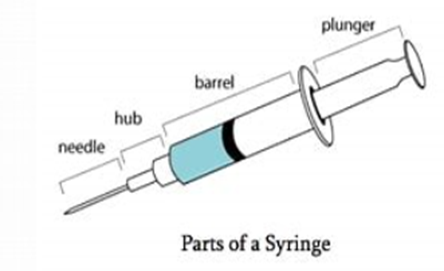
- Problem (P): Traditional COVID-19 vaccination generated massive plastic waste through single-use disposable syringes (~10 billion units).
- OOAD Analysis: Deconstruct the syringe object into separate attribute sets: A_fluid storage, A_plunger, and A_needle.
- Inventonomics Solution (S): Shift the boundary conditions. The healthcare provider manages only A_needle (recyclable metal/sterilized), while the patient retains A_body (reusable component).
- Result: Systematic reduction in plastic manufacturing volume without altering therapeutic efficacy.
Coming up: More on Methodologies and cases studies.